 0:03:59
 del.icio.us
 Digg
Digg Facebook
 Google
 Google Buzz
 MySpace
 Reddit
 StumbleUpon
 Twitter
 Yahoo
Yahoo
Contributor:
National Gallery of Art, Washington

Babble On. | Login
Timestamp: 0:02:36 |  Permalink to this note

The life and art of Johannes Vermeer are closely associated with the city of Delft. He was born in Delft in 1632 and lived there until his death in 1675. His father, Reynier Vermeer, was a silk weaver who produced "caffa," a fine satin fabric, but in 1631 Reynier also registered in the Saint Luke's Guild in Delft as a Master Art Dealer. By 1641 Reynier was sufficiently prosperous to purchase a large house, the "Mechelen," which contained an inn on the market square in Delft where he probably also sold paintings. When Reynier died in 1652 Johannes apparently inherited his father's business. By that time he must have already decided on a career as a painter. It is assumed that he trained in Delft, perhaps with Leonaert Bramer (1596-1674), who seems to have had close associations with Vermeer's family, or with Carel Fabritius (1622-1654). No documents, however, exist about his artistic training or apprenticeship, and he may have studied elsewhere, perhaps in Utrecht or Amsterdam.
Vermeer, who was baptized on October 31, 1632 in the Reformed Church in Delft, was raised a Protestant. In April 1653, however, Vermeer married into a Catholic family and seems to have converted to Catholicism shortly before that date to placate his future mother-in-law, Maria Thins. Maria Thins lived in the so-called "Papists' Corner" ("Papenhoek") of Delft, adjacent to one of the two hidden churches where Catholics could worship, the Jesuit church on the Oude Langendijck. Vermeer and his wife, Catharina Bolnes, eventually moved from the "Mechelen" into her house. They named their first daughter Maria, in honor of Maria Thins, and their first son Ignatius, after the patron saint of the Jesuit Order.
Vermeer became a master in the Saint Luke's Guild on December 29, 1653. His aspiration at that time seems to have been a history painter, for his first works were large scale mythological and religious paintings. Shortly thereafter he began to paint the genre scenes, landscapes, and allegories for which he has become so renowned. While Vermeer's subject matter changed in the mid-1650s, he nevertheless continued to imbue his later works with the quiet, intimate moods he preferred in his early history paintings.
Although very little is known about relationships with other painters who might have influenced the thematic and stylistic direction of his art, Vermeer apparently knew Gerard ter Borch II, with whom he co-signed a document in 1653. Another artist who may well have had an impact on his work during the 1650s was Pieter de Hooch, an artist who painted comparable scenes in Delft during that period. Vermeer remained a respected artist in Delft throughout the rest of his life. He was named hoofdman of the Delft St. Luke's Guild in 1662, 1663, 1670, and 1671.
Vermeer's few works--they number about thirty-five--were not well known outside of Delft, perhaps because many of them were concentrated in the collection of a patron in Delft who seems to have had a special relationship with the artist. When Vermeer died, however, he was heavily in debt, in part because his art dealing business had suffered during the difficult economic times in the Netherlands in early 1670s. After his death he was survived by his wife Catharina and eleven children, eight of whom were underage. His wife petitioned for bankruptcy the following year. Antonie van Leeuwenhoek, the famed Delft microscopist, who was apparently a friend of Vermeer, was named trustee for the estate. [This is an edited version of the artist's biography published, or to be published, in the NGA Systematic Catalogue]



Channels: Painting
Artists: Johannes Vermeer
Themes: Objects
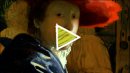
Vermeer: Master of Light is a visual pilgrimage in search of what makes a Vermeer a Vermeer. It is a journey of discovery, guiding the viewer through an examination of three of Johannes Vermeer's paintings and exploring the secrets of his technique. Utilizing the potential of x-ray analysis and infrared reflectography as well as the power of computer technology, the program delves beneath the surface of the paintings to unveil fascinating insights into Vermeer's work. This film celebrates one of the most extraordinary painters in the history of art. Narrated by Meryl Streep, with commentary by Arthur Wheelock, curator of northern baroque paintings, National Gallery of Art, and David Bull, conservator.
This segment analyzes the National Gallery's painting Woman Holding a Balance. With the help of special effects we are able to understand Vermeer's construction of the painting and his complete control of the work.
Post new comment